
If you own a circular saw, you can build your own backyard raised vegetable garden. If you just Googled ‘circular saw’ and are still planning to build your own, please google ‘how to reattach fingers’, too.
Really, there is nothing to the construction. Cut three long, even strips from a full sheet of plywood, cut one of those strips in half and screw them all together to create a 4’x8′ raised garden box. The steps below took me about four hours and I’m not very good at this sort of thing. No big deal, I swear.
How to Build a Raised Garden Box
 Step One: Buy your raw materials.
- one 4’x8′ sheet of plywood
- one 4″x4″, eight feet long
- 16, three-inch lag screws
- 40 square feet of weed barrier cloth
- 1/4 or 3/8 inch staples (to attach the cloth)
I used 3/4-inch pressure treated plywood because that is what I had leftover from hurricane season. Some feel that the wood protecting chemicals will leach into my food and kill me. They may be right. If I was to go out and buy something, I’d probably get one-inch non-treated plywood — the 3/4-inch plywood bows out a bit in the middle from the weight of the soil.
If your lumber yard isn’t too busy, have them rip the plywood into three, 16-inch wide strips and cut one of those strips in half. I’ll save you time, make it easier to get the wood home and they will do a better job of cutting a straight line than you will.
You’ll need to cut four, 16-inch long pieces to use as the corner supports.
Drill pilot holes to make your life easier and to keep the wood from splitting.
This is the only purchase I made for this project. Everything else, I had left over from other projects. A three-foot wide, 50-foot long roll of weed control fabric cost me $15.47. If you’re more environmentally-minded and prefer to use recycled materials, line the bottom of your box with old newspapers a couple layers deep.
I ran the weed control cloth a few inches up the sides of the box and then stapled it to the inside. You could also lay the cloth out flat, set the box on the cloth and then cut it even to the box (so the weight of the box keeps it in place). If that is the case, you may not need staples.
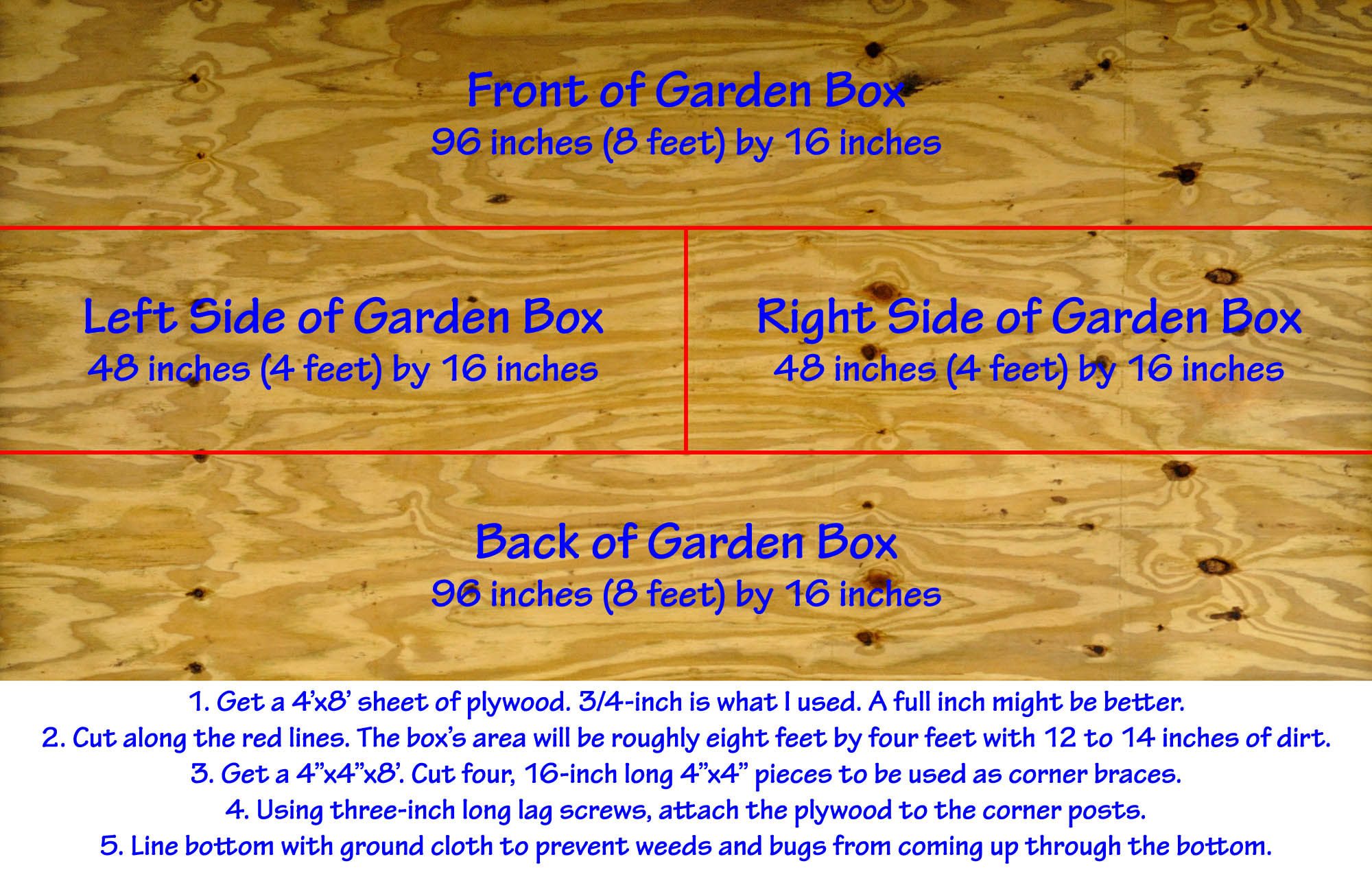
 Step Two: Cut three, 16-inch wide by eight-foot long strips of plywood. Cut one of these strips in half. (See the above graphic and cut along the red lines.)
Step Three: Cut four, 16-inch long 4″x4″ pieces.
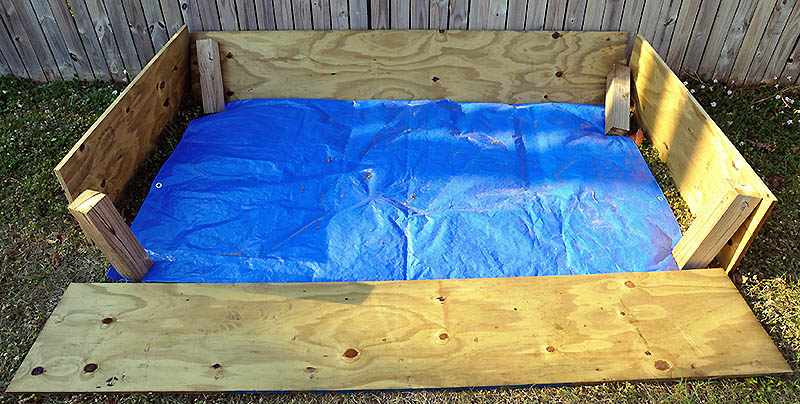
Step Four: Organize all the wood as shown on the above photo. Now would be time to have someone help you hold stuff.
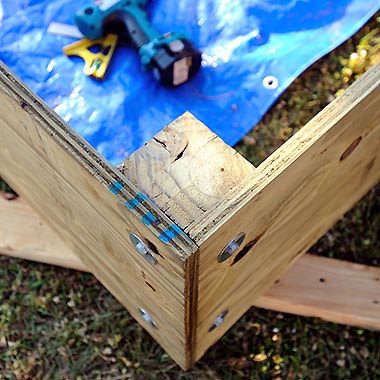 Step Five: Drilling pilot holes first to prevent splitting, attach the plywood strips to the 4″x4″ corner posts using three-inch lag screws. Make sure to carefully align the top of the 4’x4′ with the top of the plywood.
The long plywood strips sit outside (cap) the short plywood strips. This gives the wide side of the box a finished look. If you want the short side as the front, do the opposite.
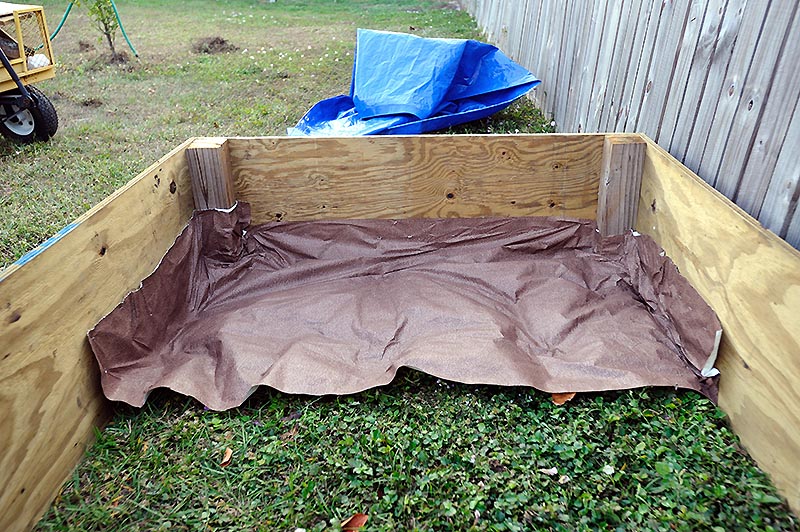 Step Six: Attach the weed control cloth to the inside of the box. This is critical. We don’t want grass or bugs attacking from below. A good quality weed control cloth attached well will keep bugs and unwanted plants our for a season or two.
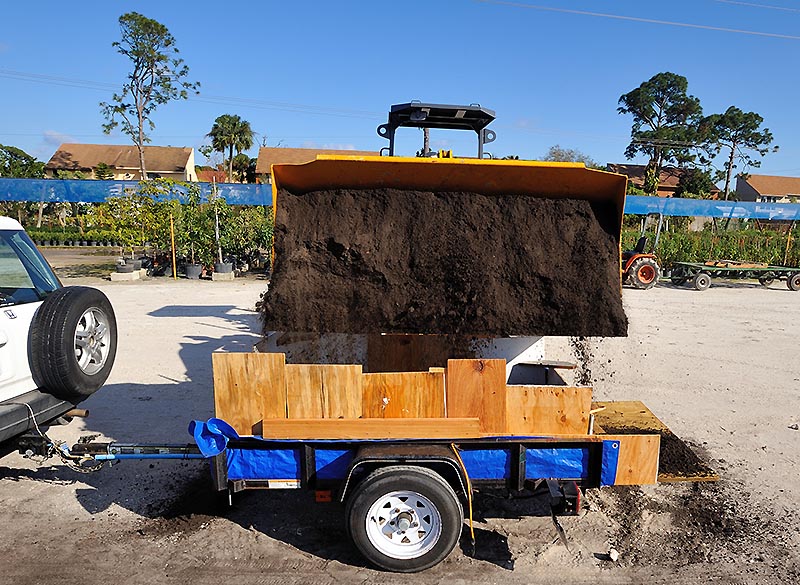 Step Seven: Get some good quality soil. I paid $20 for bucket-loader full of soil from Art by Nature Garden Center. That was plenty of dirt to fill your 4’x8′ box 12 or so inches deep. Everything I have read says eight to ten inches should be plenty of dirt. My box walls are 16 inches tall so I opted for a deeper garden. Call me an overachiever.
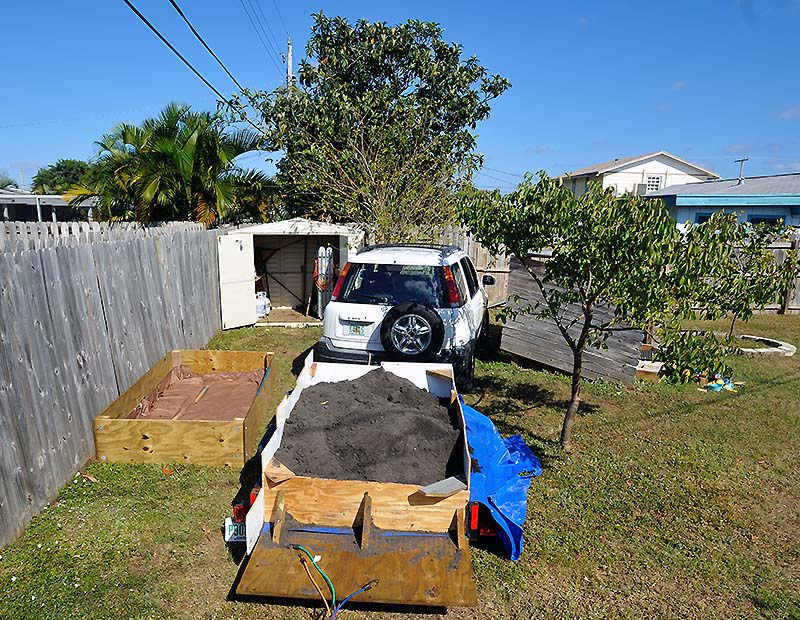 Step Eight: In terms of raw, physical labor, this step is the worst of the batch. Unloading that much dirt is a full upper body and abdominal workout.
Hint: unload the when the dirt is dry. As my father learned when he shook hands with sandbags during a Mississippi River flood, dry sandbags weigh less than wet sandbags.
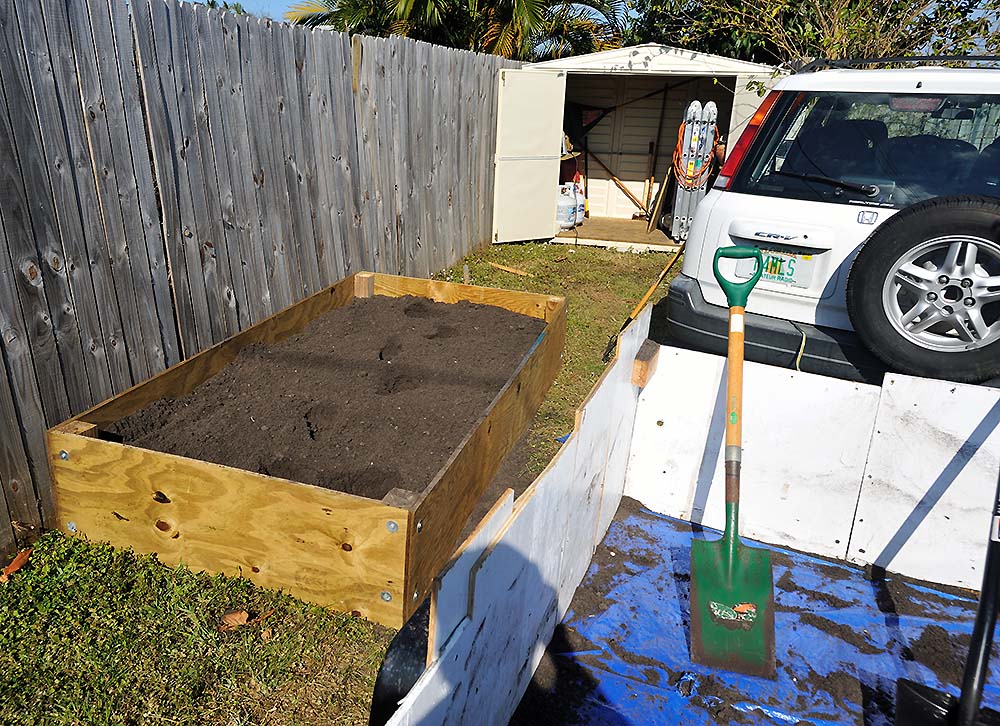 Step Nine: Stand back and admire your wonderful new raised vegetable garden.
How Did You Do It?
Do you have a backyard raised vegetable garden that was similarly constructed? If so, drop me a note and, better yet, a picture. I’d love to see what yours looks like.
—Farmer Matt
Tags: 13 Comments

I be impressed with both your completed project and your detailed instructions for how to do it.
For the record, I counted the same number of fingers at the start and end of the construction. (All attached, too.)
That’s much better than when we built the shed in our backyard. On the very first swing at the very first nail, I missed the nail, hammered my finger, breaking it, earned a trip to the emergency room and found out very dramatically I was allergic to codeine.
Glad you had a better experience. It’s nice to know that I served some purpose in life, if only a bad example.
When will you be stopping by to build our garden?
I just completed the project for my wife for Valentine. I went a little further and made four (4’x4’x16″) instead of 8’x8’x16″. The separate boxes allow you to walk around and as well separate planting better. My wife is so excited that I build up brownie points for a while. I am kind of proud of myself. This was my first project from the internet, but your instruction was very simple and it beat hauling in railroad ties. The cost saved me $100 over and my got to watch and cheer me on, an added bonus.
Nice work! What did you plant? Good work on starting with twice the size garden I did.
This weekend I built an addition onto our garden. The addition will hold the strawberries, snap beans, cucumbers and watermelon. I’ll throw some photos up later this week.
Take some pictures and send them to me and I’ll post them here. I’d love to see what your garden looks like.
Cheers,
Farmer Matt
A simple way to get started in a hurry for a short season would be to cruise the big trash piles at the curb, find an old dresser, remove the drawers and use them as the boxes. Try to find wooden ones — not the chipboard cheap ones. Drill a few holes in the bottom, or knock out the bottom to maintain the frame. Line it with the grow cloth that Matt used, and fill with dirt.
One drawer is big enough for 4 tomato plants and a row of broccoli or peppers.
This is the Green Way to do it: You’re recycling a potential landfill waste.
I am about to make a box out of leftover construction materials including composite plywood. I don’t know how long it will last as siding, but I suppose it won’t be more than a year or two.. would you tell me how long your box will last with the materials you used? Do you plan on keeping it for a year, or for longer?
I saw an interesting tip for window boxes the other day; using drain gutters for houses. I like the idea of the dresser drawers, but you may want to drill holes in the bottom for drainage and apply strips of wood to the underneath to keep it elevated.
Any tips to dispel ground squirrels, naturally? I’m not sure chicken wire will keep them out entirely.
Thanks for your post, Mr. Farmer.
I hope you enjoy your crops!!
Dan, my garden box was built in January 2009 and it still in fine shape going on three years. I used pressure treated plywood which probably helps but regular plywood is fairly resilient, too.
Not sure about ground squirrels. I have far more of a problem with bugs/infections than I do with varmints.
Cheers,
Farmer Matt
What would differ in construction, if we plan on placing the raised bed on a concrete area of our yard, instead of a grassy area?
Would we need to line it differently/ Or have some plan for drainage?
Thanks!
Your project and photos are wonderfully executed!
Drainage… Hmmm… You don’t want to turn your raised garden into a swimming pool.
Maybe you can cut a few notches in the bottom of the plywood to let water seep out. It wouldn’t need to be more than a two-inch by four-inch cut every foot or two…
Make sure the weed barrier is secured to the inside of the box above the notch points. That way your soil won’t leak out when it rains but the water will still slowly drain out of the box.
When you get your garden up and running, please send me a few pictures and a short description of your garden.
Cheers,
Matt
Hi Farmer Matt
I purchased a durable plastic raised garden. However, I am so new at this that I have a question. There is no bottom. I have placed it on the lawn in a sunny spot. Can I put the weed barrier directly on the grass then add my soil?
Regarding the raised plastic garden: if you’re in Florida, you will find that nematodes are your worst nightmare. They come from the soil and are systemic pests – eating the plant from the inner stem system. The raised beds and weed barrier prevent this somewhat; but planting on the ground, they’ll ignore your garden for a season, but will set upon it in season two. In summer, you can kill them by baking the soil: cover the soil with a layer of thick plastic and let the sun have at it for 6 weeks straight. Not only will your garden be weed free, but nematode free as well.
Thanks for posting this. It’s exactly what I needed to know and what I was looking for….
Thanks so much for posting this plan. I purchased supplies today and bought a circular saw. Was a fun experience cutting the wood to size. Tomorrow I’ll buy the dirt and get this project wrapped up. Felt happy to be following a proven plan – thanks!
– Jen Quinlan
Austin, TX